11.14.2014

FGC2015

Hey All Y'all! I know I post infrequently, but would like to announce the Human Pathogens within the Dimorphic Onygenales meeting in conjunction with the GSA sponsored Fungal Genetics meeting at Asilomar, Pacific Grove, CA. #GSA #FGC2015 @DrValleyFever One month left to register!

4.17.2014

Video from KVIE

A face to the disease.

Occupational exposure

Well, this just came across my desk today - Occupation exposure among cast and crew. It brings up several interesting aspects- number one being, I wish I knew who the actor was! Maybe we could have a spokesperson for VF! Other than that selfish response, I think it also highlights a great source of data that is only available in California. No other state considers coccidioidomycosis as a work related injury. I imagine these are not the only cases of cluster infections, but it seems that it would be really helpful to follow more of these exposures, and combine with our soil analysis. I'll be reporting more on soil work, as my lab just got funding to expand theses studies and my hope is that we will have a very robust and scalable application for environmental detection.

4.16.2014

CSG 2014

Forgot to mention the annual Coccidioidomycosis meeting that happened weekend before last. It was very well attended, with some higher profile researchers giving talks. After the main meeting on Saturday, we had a gathering of folks interested in Cocci in the soil. Will post more info as it becomes available. For now, we are developing a linked in group. Comment or email to request joining.

2.27.2014

2.04.2014

More VF in the news

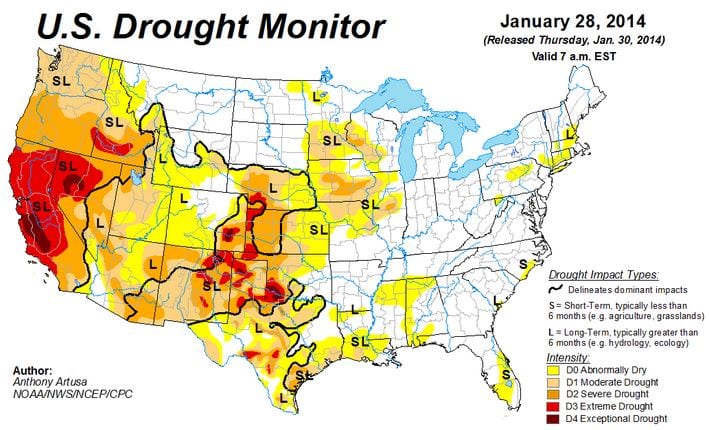
Another recent article on Daily Beast about Valley Fever. It goes on tho talk about the disease as a silent epidemic. It supports my previous post/update on why we need more basic research on this organism. It is undeniable that the disease burden has increased over the last 20 years- and we have no idea why. The recent drought, at its most extreme in the San Joaquin Valley (the "Valley" in VF) could increase conidia (aka spores) in the air/soil...or not. We don't have a good handle on the organism's biology or natural host. So, no idea if the CA drought will increase VF. We also don't understand why SOME people have such severe cases of VF. Is it fungal pathogenicity or human susceptibility? Or both? Or is it just dosage? Again, NIH willing, I hope to answer some of these questions! From another recent article, "Diseases that don't have a high profile also struggle for funding. Consider this: In the past 12 years, the National Institutes of Health has granted valley fever just 4 percent of the research funding it has directed toward . But valley fever has afflicted about four times more people than West Nile, with thousands more going undiagnosed. Valley fever has killed many more people, too." After getting a really crappy comment on our recent grant "only 4000 people have died form the disease" it makes me a bit irritated that the funding is so skewed...

1.30.2014

Found this paper today. Not sure how I missed this one!

1982 research on Cocci epi Interesting 22 year study to determine conversion and dissemination for coccidiodomycosis. #fungi #coccidioides

Impact of coccidioidomycosis in California

New yorker article about Valley fever

oldie but goodie

This is a good article!

UPDATE 2014!

Yep. Been ages since posting. Updates include a new assistant professor position at NAU/TGEN-north in Flagstaff. Loving life! Coccidioides is now my main focus and we are working on a number of fronts. 1) Understanding innate immunity in early infection. Coccidioides plays this crazy game with ?resident aveolar macs? (we assume) wherein it seems to go completely undetected by the immune system in the first 4 days of infection. Meanwhile, it is growing and dividing within the cell wall, making a giant (80-120 microns!) spherule. Once it is mature (full of "mini-mees" aka endospores) it ruptures open. And then all hell breaks loose. Literally. The immune system goes CRA-CRA. Massive inflammation and tissue damage. Tons of neutrophil influx. But why nothing in the frst 4 days? Or is there something, we jsut don't see it? Perhaps the fungus actively supresses the host? All great questions, and we've submitted 2 grants to try to answer this question. 2) Understanding the effect of hybridization and introgression on pathogenicity. This is my bread and butter right now. This really cool finding from the genome work I did for my PhD has been gnawing at me, demanding further attention. This is the basis of my funded K22 grant from the NIH. We are just TODAY looking at RNA seq data from the first mouse infection and so far so good! We are finding some Coccidioides RNA in the lungs, and were able to do some real time PCR to detect some VERY INTERESTING patterns in the data that may help to explain observations in #1. 3) What the heck is going on in the soil? Another one of the main questions we have is "where the heck is this organism growing in the environment?" The disease is only acquired from the environment. There are weird cases of transmission from infected tissue in a transplant and contaminated dressings where the spherules in the body returned to being mycelia, but these are exceedingly rare. Basically everyone that gets sick inhales the spores from the soil. Despite a lot of work that has gone one, very little is know about where and when the organism is actively growing in the soil (never say dirt. I've learned this detail from USGS folks, lol). We have some ideas of course, but working on getting some funding to pursue this as well. Nothing like a great mystery to keep life interesting! OK! That's my update. I'll also post some links to recent articles about Cocci.

3.29.2013

writen in 2009. #23 1. I feel compelled to join in. 2. I am a "joiner" even tho I like to think I am a cool loner. 3. I love (LOVE) the Doors. I own every album, and then some. I love Morrison's poetry, even if it is a little contrived and juvenile on occasion. Poetry can be that way. I used to write, but realized it was pretty lame...MY poetry, not writing it in general. 4. My sister is my hero. 5. I have been with Rob for almost 20 years...half my life more or less. I love him too! 6. I don't have kids, instead I have a dog named Victor, and he is spoiled rotten. He is my surrogate child. He sleeps in the bed, goes just about everywhere with us. I agree with Scott, dogs are higher beings. Victor teaches me daily. 7. You are likely to find me sitting in front of a computer 50% of the time. And not always for work. I am slightly addicted to facebook. 8. I am not a girly girl, and I am not afraid of bugs, but I cannot stand cockroaches. Even the Madagascar hissing ones that are supposed to be so cool. They freak me out. The combo of speed and the freaky antennae...*shiver* 9. I have been blessed with a wonderful family- both the one I was born to and the one I've chosen for myself- Miss Eldena, Uncle Lewlis, Amanda, the Orser clan- I am lucky. 10. My mom once told me that you had to be driving faster than 90 mph to hit a bird, because they are so fast they can get out of the way if you go slower than that. I thought for a moment and said "well, not if they are suicidal." I was 10 or 12. I think she's been worried about me ever since. 11. Camping is not just something I do on Memorial day because I have to. It is my mostest favoritest thing to do. If I won the lottery, I would not buy a big house, I would get the best north face gear and a nice 4x4 and camp all over the world for the rest of my life. No shower for weeks? Deal. 12. I try not to be judgmental, but rather to accept people as they are. The ones I find most difficult are people that are fixed. All their opinions about everything are completely decided- usually by some outside authority- and they can not listen to anything that contradicts the fixed belief. 13. I am an atheist. I was raised Episcopalian, and have been exposed to a myriad of religions: Mormonism, Lutheranism, Catholicism, Judaism, Islamism, Buddhism, Taoism...-ism. Buddhism probably comes closest. Being an atheist doesn't mean I am not a moral person. The 2 are not mutually exclusive. 14. Science is my passion. Biology specifically, but I like most all science. I had a fun time helping teach Physics and Chemistry to 6th and 8th graders. 15. I was hooked on Genetics in the 7th grade. My first punnet square and I couldn't get enough. Genetics is predicting the future. Like magic. 16. Star Trek and Star Trek Next Generation leave me with a conundrum. Kirk or Picard? I can never decide. 17. For many years, my only transportation was a pink Nishiki 10 speed. I would load up my laundry in my backpack. I took the bus. 18. The first car I bought from a car dealership was the car I have now, and have had for 8 years. It has gone on more dirt roads, and made more trips to Montana, than most Hummers. I don't feel the need to have a shiny new car to express my fitness. A car is a tool, not a substitute for cool. 19. I love driving on dirt roads. You see more that way. I always feel so weird after driving on a back road, and then suddenly being forced onto the interstate. People seem so aggressive and dangerous. They are unaware that they could be crushed by a semi at any moment. 20. I learn the most from people who are different from me. It is comforting to have someone tell you "I totally get that" or "I think the same thing" but you don't learn anything about yourself, or your beliefs, from that. 21. I consider myself to be a socialist libertarian. I believe in complete personal freedom, but I also believe in a social contract. As long as you don't hurt other people, you should be left alone. But I also think that the social system must be there to help produce better citizens/society. 22. In addition to #21, I think it is insanity that corporations are considered individuals. That needs to stop. 23. More than anything, I want to be a college professor- one who gets to do research and teach. 24. I like planting a garden, but I hate pulling weeds. 25. I despise war, and think we'd all be a lot better off if we figured out how to talk to each other

12.02.2011

Genetics and canine racism

Something has been bugging me lately. So, I will blog about it- speaking to the ether/interwebs may help. You may notice that I have changed my photo on my page. In order to start the conversation. If anyone has had a mixed breed dog- a MUTT if you will, you know the curiosity that ensues- what IS my dog?? Genetic testing has become a craze to help folks answer this question, but in my mind- the mind of a geneticist- what does the REALLY tell us about our beloved pet? If you find that there is some familial lineage leading to a pit bull or a rottweiler, does that change who your pet is? Well, in the minds of "canine racists" it could. A breed designation does not define the dog. The raising, socialization and training a dog receives is what defines the dog. Often I refer to my Irish/Scottish/German/Norwegian heritage. But being raised in America makes me an American in modern society. Being raised by decent parents and getting a good education has defined me as a person. Yes, our genetics plays a role, but in a very complex and variable way. I call for an end to canine racism!!

12.07.2010

Blogging about science

OK. It has been ages since I posted last. I just saw this article and though it was a good place to start. In the fungal pathogen world, there is a lot of debate about "what makes a pathogen" - basically, many of the human fungal pathogens out there are considered "opportunists" in that in a normal human host they are not able to cause disease. Well at least rarely are they a problem in healthy people. MFF (my fav fungus) Coccidioides is a bit more of a bear in that respect- it really does infect and kill healthy people. But a bit of an outlier.

This article reviews what is known about genomic differences between a bread mold and a pathogen. Really, there is not that much difference (and never mind that occasionally the bread mold WILL cause disease) but there are some trends that pop out. The ability to: stick to surfaces, be resistant to anti-fungal drugs, and basically be flexible- in your food source, your genetic make up and your morphology.

Another nice aspect is that the article is open source! Devour at will!

3.08.2010

Yes Virginia, there are fossil fungi

I love fossils, especially when they are of fungi!

1.05.2010

Why Basic Research needs to be funded

So often I end up writing statements in grants such as "My research will cure (insert favorite cause here)." And I always feel a little weird about it. Because it certainly could be true, however much more likely is that my research will have little immediate effect. This is because I do basic research.

This article in Infection and Immunity really said it well. It is by Fang and Casadevall, accepted ahead of print. I know not everyone will be able to download this directly, but find it if you can, it is an amazing read.

In short, basic research is necessary in and of itself. We cannot predict the effect of a discovery. How would we have known that studying telomeres could lead to an understanding of aging, for example? So, when you hear politicians talk about "pork barrel spending" and "ridiculous research" that they get from a title of a grant, think about my favorite quote from their paper:

"We didn’t know at the time that there were any particular disease implications. We were just interested in the fundamental questions. . . (this) is really a tribute to curiosity-driven basic science"

--Nobel Laureate Carol Greider

12.23.2009

The Danger of Pet Hypotheses

Great article!

Remember to keep an open mind, even if that means you have to refute your own pet hypothesis.

11.24.2009

Comments on Sewell...

This article was on the main YAHOO page today

Is this what passes for intelligent debate? We'll blame Darwin for Columbine, and school shootings in Finland? And setting up scientists as the evil and unreliable determiners of human fate? OK, yes, I know that Darwin had some wacky ideas about race. But I accept evolution as fact. Darwin's limitations do not take away from this.

To the first point. Yes, we should always reassess any scientific hypothesis. This is the purpose of science. But confusing the opinions of Darwin with the evidence for evolution is misleading at best.

Second point. I don't think I should really dignify this with a response. But here it goes. Any idea can be twisted to serve as an excuse for someone's behavior. The devil made me do it, God told me to shoot those people, Darwin wanted me to be the sword of natural selection...and so on. Lame.

Third comment...human beings are the most important life forms on Earth. This is an idea that I believe allows people to disrespect life. Human beings are part of life on this planet, we are connected to it and what we do to the rest of the living beings on this planet, human or not, affects us.

Fourth. Science as an interest group. Good. We all get together and make dastardly plans in smoky back rooms...someday maybe I'll be invited.

Fifth. Eugenics was used to further ideas that are still in our society. Genetics wasn't the cause of it. Using genetics to look at traits in human populations is not Eugenics. Evolutionary psychology is trying to understand something about the effect of genetics on behavior. Some of it is pseudoscience. Genes make proteins and those proteins can affect how your neurons are formed and work. Not a big leap to think that those things might affect behavior. It is a big leap to say that "scientists" will then develop breeding programs for humans.

Sixth. No one is proposing that we start a eugenics program! This isn't even a criticism of Darwin. It is criticism of knowledge. He is basically saying that we shouldn't look at human behavioral genetics because someone might get the idea to start up a Eugenics program. NS.

Seventh. I have to quote it. "What has the theory of evolution done for the practical benefit of humanity? It's helped our understanding of ourselves, yet compared to, say, the discovery of penicillin or the invention of the World Wide Web, I wonder why Darwin occupies this position at the pinnacle of esteem. I can only imagine he has been put there by a vast public relations exercise."

This sort of criticism shows a lack of understanding of biology. The example of penicillin is amusing. Has he heard of the evolution of resistance to penicillin in bacteria? Without an understanding that the strong selection of an antibiotic on a population of bacteria can increase the frequency of a mutation that allows the bacteria to be resistant to penicillin (natural selection!!), we wouldn't have understood why our antibiotics don't work so well anymore. Infectious disease modeling relies on evolution to understand how infectious disease change over time and evolve new strains that are more pathogenic and drug resistant, and determine the source of infection. SARS, HIV, influenza anyone??

10.30.2009

10 things I like about Bozeman...first impressions

10. SNOW
9. green green green!
8. no overhead flights
7. Silence at night
6. happy dogs
5. deer in the yard
4. walking trail just outside the back gate
3. people look you in the eye and say hello as you walk past
2. mountains
1. YNP is an hour away

10.12.2009

10.11.2009

10 things I WON'T miss about Arizona


10. Dust
9. overhead military flights (we are right in the flight path for DM)
8. police helicopters with search lights every weekend
7. Our frat-boy neighbors that listen to their iPods on level 10 while passed out on the porch at 4AM
6. Cockroaches
5. swamp coolers
4. thorns, stickers and spikes
3. border patrol
2. the republican legislature
1. July